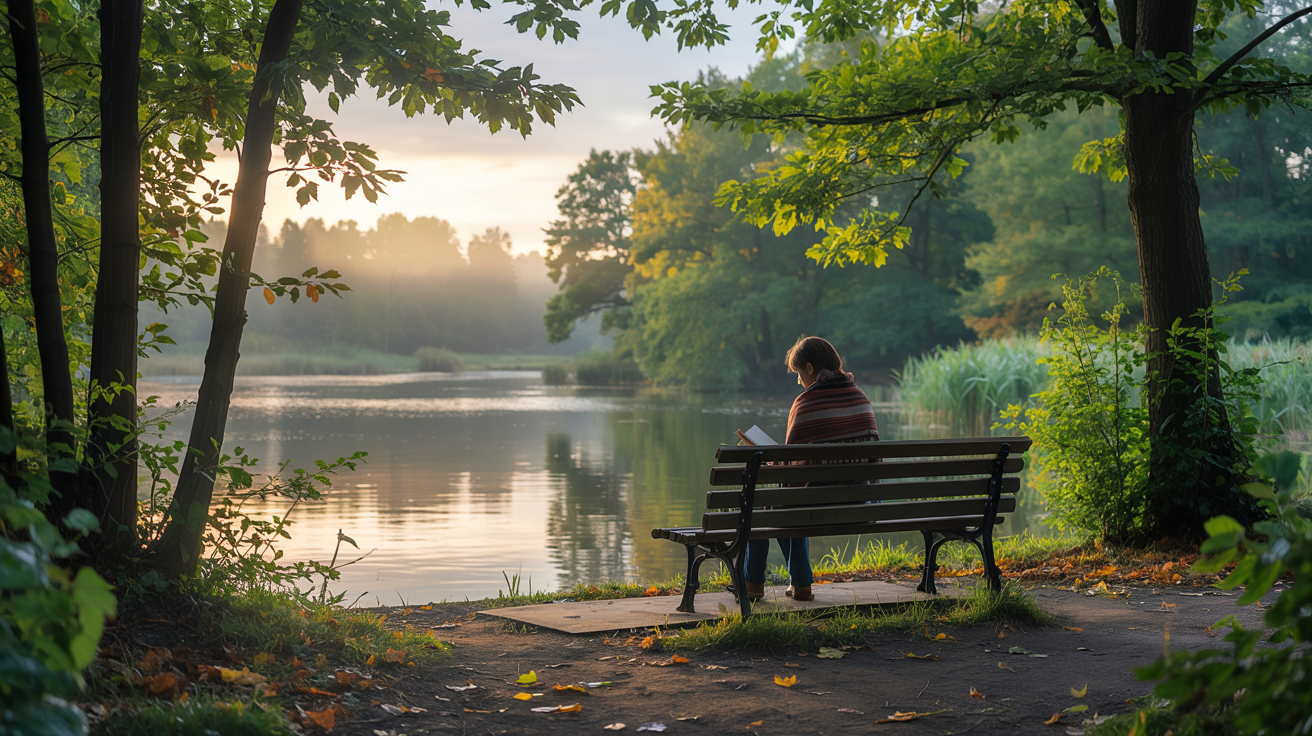



Throughout history, solitude has played a pivotal role in the lives of some of the world’s greatest thinkers, creators, and visionaries. From philosophers and writers to scientists and artists, many have turned to solitude not as a retreat from the world but as a means to engage deeply with their thoughts and aspirations. Solitude fosters clarity, nurtures creativity, and provides the mental space needed to explore profound ideas.
Solitude is not merely being alone but a mindful engagement with oneself. In these moments of quiet, the mind can wander, reflect, and innovate. For great thinkers, solitude has often been a workshop for groundbreaking ideas.
Quote to Consider:
"Without great solitude, no serious work is possible." — Pablo Picasso
In solitude, distractions fade, allowing uninterrupted focus. It fosters:
Einstein valued solitude as a crucial element of his creative process. He often spent hours alone, reflecting on complex theories and imagining scenarios like riding alongside a beam of light—a thought experiment that ultimately led to his theory of relativity.
Lesson:
Quiet reflection can lead to revolutionary ideas. Use alone time to explore "what if" scenarios and let your imagination roam freely.
Marie Curie’s groundbreaking discoveries in radioactivity were the result of countless hours of solitary experimentation in her lab. She worked tirelessly, often in isolation, driven by her passion for science.
Lesson:
Solitude enables sustained focus and persistence. Dedicate time to your passions without fear of external judgment or distraction.
Thoreau’s time at Walden Pond, chronicled in his book Walden, was a deliberate retreat into solitude. He sought simplicity and connection with nature to gain clarity and insight into life’s purpose.
Lesson:
Step away from the chaos of daily life to reconnect with nature and reflect on what truly matters. Solitude in natural settings can be profoundly restorative.
Virginia Woolf argued for the importance of “a room of one’s own” for women to create and think freely. Solitude was essential for her to write, imagine, and express her groundbreaking ideas.
Lesson:
Claim your space—physically and mentally—for solitude. Protect your creative and intellectual freedom.
Tesla often spoke about the importance of solitude for innovation. He described his alone time as critical for visualizing and refining his groundbreaking inventions.
Lesson:
Use solitude as a space to incubate ideas and refine your vision before sharing it with the world.
Great thinkers often use solitude to grapple with complex problems. Without external distractions, the mind can focus deeply, uncovering solutions and insights.
Example:
Isaac Newton developed his theory of gravity during a period of solitude at his family estate, escaping the plague in London.
Solitude provides the freedom to explore unconventional ideas without the pressure to conform.
Example:
Galileo’s revolutionary work in astronomy emerged during solitary studies, challenging widely held beliefs of his time.
Spending time alone strengthens emotional independence, enabling thinkers to pursue bold ideas despite criticism or opposition.
Example:
Charles Darwin’s solitary voyage on the HMS Beagle provided the space to develop his groundbreaking theory of evolution.
Set aside dedicated time each day for quiet reflection or focused work. Morning or late evening can be ideal for uninterrupted solitude.
When faced with a complex issue, step away from distractions. Allow your mind to work through the problem in a quiet, undisturbed space.
Follow Thoreau’s example and spend time alone in nature. The tranquility of natural settings can inspire clarity and creativity.
While solitude is valuable, balance it with meaningful social interactions. Share your ideas and insights with others once they have matured in your solitary reflections.
Many people associate being alone with loneliness, but solitude is a positive, intentional choice. Shift your perspective to see solitude as an opportunity for growth.
Digital distractions can undermine the benefits of solitude. Create tech-free zones or time blocks to fully immerse yourself in the experience.
Busy schedules can make solitude seem impossible. Start with small moments of quiet—five minutes of deep breathing, a short walk, or journaling before bed.
Great leaders often use solitude to reflect and make important decisions. For example, Bill Gates famously takes "Think Weeks" to immerse himself in reading and reflection.
Takeaway:
Use solitude to think strategically and make informed decisions in your personal or professional life.
Many creative professionals—authors, designers, and entrepreneurs—credit solitude as the wellspring of their innovation.
Takeaway:
Dedicate time to explore creative ideas without judgment or interruption.
Psychologists emphasize the importance of solitude for mental well-being, noting that it helps reduce stress and improve emotional regulation.
Takeaway:
Incorporate solitude into your self-care routine to maintain a healthy balance between productivity and relaxation.
Beethoven would take long, solitary walks in the countryside, where he would jot down musical ideas that later became masterpieces.
Austen often retreated to her quiet writing desk to craft her enduring novels, such as Pride and Prejudice and Sense and Sensibility.
Edison would isolate himself in his lab for hours, immersed in experimentation, resulting in over 1,000 patented inventions.
While solitude is essential, it should not come at the expense of meaningful connections. Great thinkers often balanced their alone time with collaborative efforts.
Use your solitude to refine ideas, then share them with trusted peers for constructive feedback.
Some great achievements have come from working alone yet being part of a larger intellectual community. For example, Einstein exchanged letters with fellow scientists, sharing insights born from his solitude.
The lives of history’s greatest thinkers teach us that solitude is not an escape but a gateway to achievement. It is in these quiet moments that ideas take shape, creativity flourishes, and profound insights emerge.
By embracing solitude, we can tap into our inner genius, align with our true selves, and contribute meaningfully to the world around us. Whether you’re seeking clarity, pursuing a creative endeavor, or striving for personal growth, the lessons of solitude provide a timeless blueprint for success.
“Solitude is the soul’s holiday, an opportunity to stop doing for others and to surprise and delight ourselves instead.” — Katrina Kenison
Take time to embrace solitude, and you may find that the greatest discoveries—both about the world and yourself—await you in its quiet embrace.