


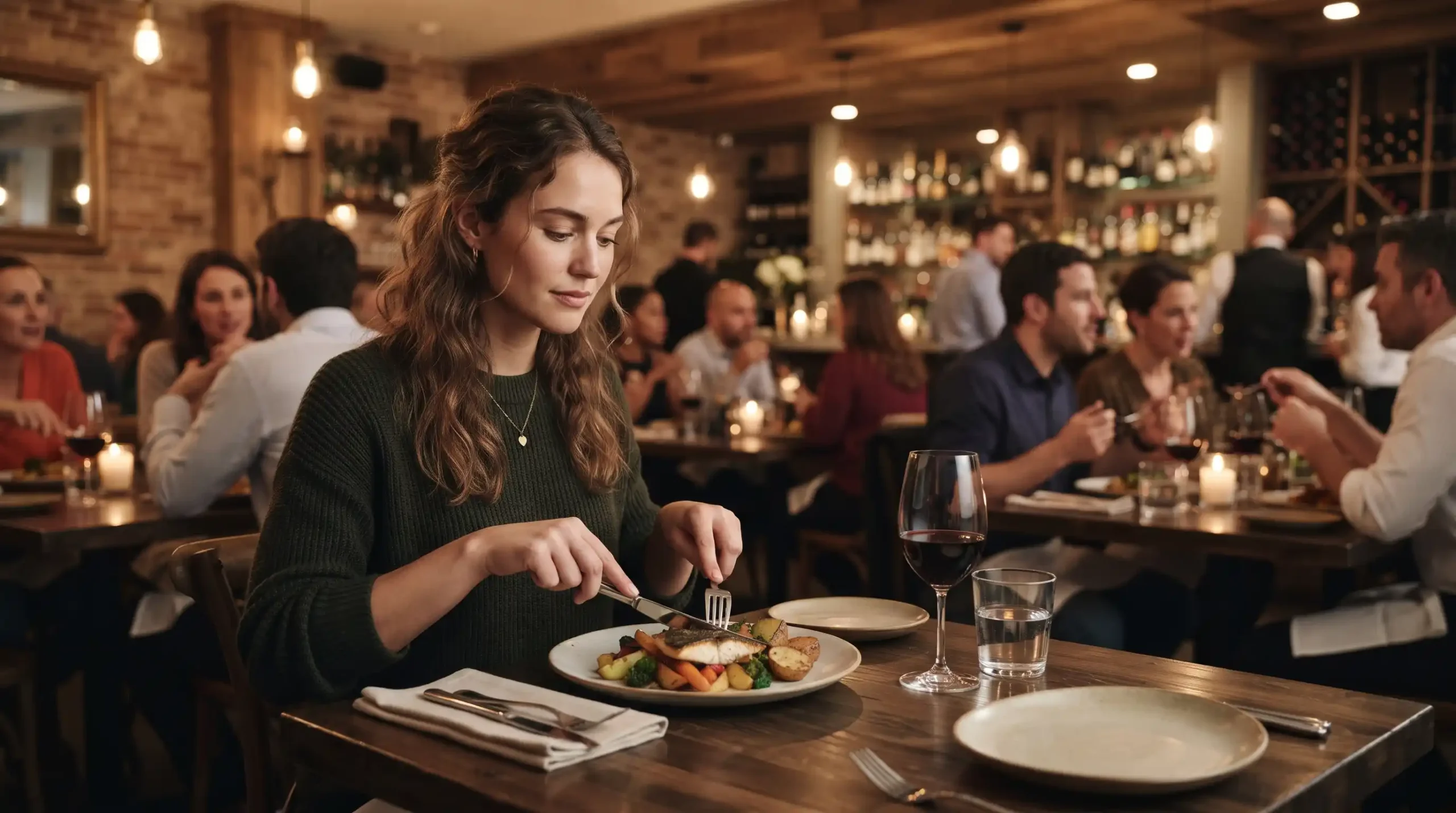
There's a particular kind of hesitation that shows up right at the restaurant door when you're about to eat alone. You pause. You glance in. You wonder, for a split second, if the host will ask "just one?" in a tone that makes you feel smaller than you are. For something as simple as eating a meal, it can carry a surprising amount of anxiety.
If you've ever ordered takeout instead of sitting down, or eaten in your car rather than walk into a restaurant alone, you're far from alone in that experience even though the irony of that phrase isn't lost on anyone who's felt it. Eating alone in public is one of the most common, quietly avoided fears tied to solitude, and understanding why it feels this way is the first real step toward getting comfortable with it.
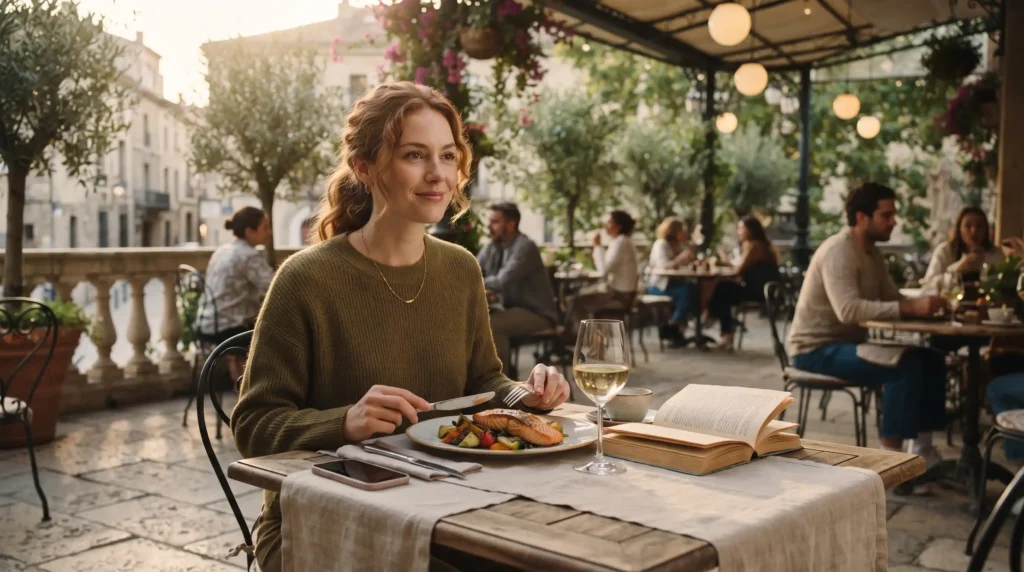
Unlike many solitary activities, eating alone in public happens under direct, unavoidable observation. There's no phone screen to hide behind indefinitely, no task to appear busy with just you, a table, and the quiet assumption that everyone around you is watching and judging, even when they almost certainly aren't.
Much of this discomfort ties back to a well-documented psychological pattern called the "spotlight effect," the tendency to overestimate how much other people notice and judge our actions. In reality, most fellow diners are absorbed in their own conversations, meals, and thoughts, rarely sparing more than a passing glance at anyone else in the room.
Understanding that the fear is largely self-generated, rather than externally imposed, doesn't make it disappear instantly, but it does make it easier to challenge.
Eating in public alone often triggers a specific kind of social anxiety rooted in the fear of appearing friendless, undesirable, or "less than" in a shared social space. Historically, humans have relied on group dining as a bonding ritual, so being visibly alone in that context can unconsciously signal exclusion, even when it isn't.
This fear tends to be strongest at the beginning of a solo dining experience: walking in, being seated, ordering, and often fades noticeably once the food arrives and the mind settles into the experience of eating, rather than the anticipation of being watched.
Jumping straight into a formal, quiet restaurant as your first solo dining experience is a bit like learning to swim in the deep end. Instead, ease in gradually.
Each low-stakes success builds a small amount of evidence that nothing dramatic happens when you eat alone, evidence your anxious mind will need before attempting quieter, more formal settings.
Most people aren't thinking about you at all, and when they briefly notice you're alone, the far more common internal reaction is admiration or neutrality, not judgment.
While the long-term goal is comfort with simply being present, it's completely reasonable to use light supports in the beginning.
Over time, most people find they need these supports less and less, eventually preferring to simply enjoy the meal itself.
Where you sit can meaningfully affect how exposed or comfortable you feel during a solo meal.
There's no universally "correct" seat; the goal is choosing one that reduces your specific discomfort, whatever that looks like for you.
Confidence in solo dining, like most social confidence, tends to build through repeated exposure rather than sudden realization. Deliberately practicing the specific moments that feel hardest accelerates this process.
People who eat alone comfortably tend to share a few common habits: they order without hesitation rather than apologizing for their choices, they make eye contact with staff and other diners naturally rather than avoiding it, and they treat the meal as a normal part of their day rather than a spectacle requiring justification. None of this is about performing confidence; it's the natural result of having done it enough times that it stops feeling remarkable.
Is it normal to feel nervous eating alone in public? Yes, it's an extremely common experience, especially for the first several attempts. Most people report the anxiety fading significantly after repeated solo dining experiences.
What's the easiest way to start eating alone in public? Casual, busy environments like cafés or food courts during peak hours tend to be the easiest starting point, since solo diners are common and less noticeable there.
Do restaurant staff actually judge solo diners? Restaurant staff generally view solo diners as completely normal guests, no different from any other table. Any perceived judgment is far more often internal than external.
How long does it take to feel comfortable eating alone? This varies by person, but many people notice a meaningful shift after just three to five solo dining experiences, particularly when they resist the urge to avoid the discomfort altogether.
Eating alone in public rarely feels dramatic to anyone except the person doing it, and even then, usually only for the first few uncomfortable minutes. The fear tends to live almost entirely in anticipation, not in the experience itself.
Each meal you sit through, uncomfortable or not, quietly builds a different kind of confidence the kind that comes not from needing company to feel at ease, but from knowing you're genuinely fine on your own, even in a room full of people.






So,I like it